Dental Bridges Near You
A missing tooth can affect more than your smile. You may notice changes in chewing, food getting trapped in the gap, or nearby teeth gradually shifting. At Bloor Lansdowne Dental, we offer dental bridges in Toronto to replace missing teeth and help restore your bite and smile.
If you are looking for dental bridges near you, our team can examine your remaining teeth, discuss your replacement options, and determine whether a dental bridge is suitable for your oral health needs.
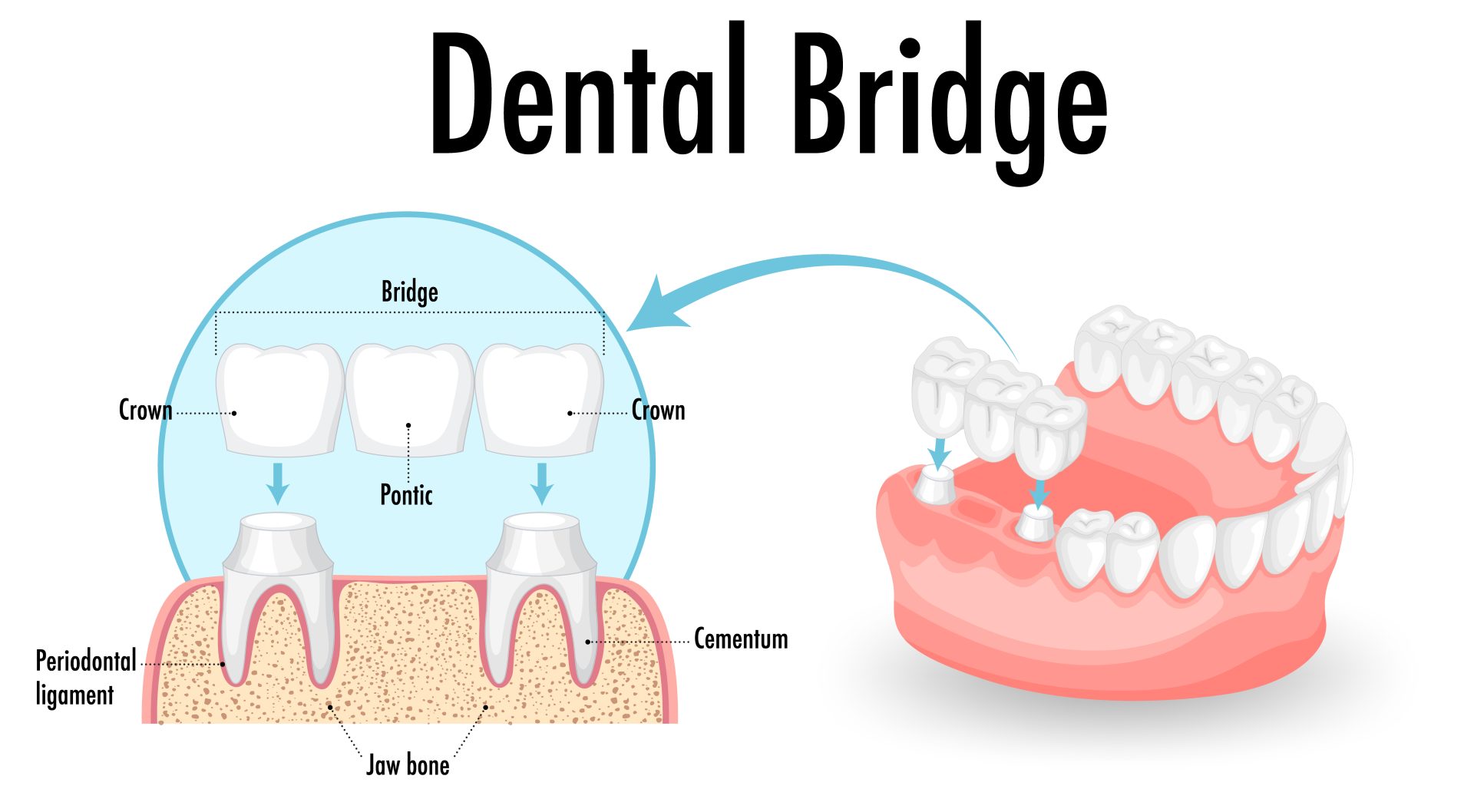
What Are Dental Bridges?
A dental bridge is a fixed restoration that replaces one or more missing teeth. Traditional bridges use neighbouring teeth for support, with artificial teeth filling the gap. Implant-supported bridges are another option in suitable cases.
A dentist near you will assess your remaining teeth, gums, and bite to determine whether a bridge is an appropriate option. The restoration should fit comfortably and work with your natural bite.
When Might You Need a Dental Bridge?
Missing teeth can affect chewing and sometimes contribute to changes in the position of surrounding teeth. Replacing the gap may help address these concerns.
A dental bridge may be considered for several reasons:
- Missing Teeth: Replace one or more teeth lost through decay, injury, or other dental problems.
- Difficulty Chewing: Restore the biting surfaces needed to chew food more comfortably.
- Shifting Nearby Teeth: Fill the gap to help limit unwanted movement of neighbouring teeth.
- Speech Changes: Replace certain missing teeth that may affect how you pronounce words.
- Preference for a Fixed Restoration: Choose a replacement that stays in place rather than one that needs to be removed daily.
- Suitable Supporting Teeth: Use neighbouring teeth for support when their condition allows it.
We provide dental bridges in Toronto to replace missing teeth and restore everyday functions such as chewing. We consider the location of the missing teeth, the condition of your remaining teeth, and whether another replacement option may be more appropriate.
Benefits of Dental Bridges
A properly designed bridge can replace missing teeth and help restore everyday oral function.
- Improved Chewing: Replacement teeth help restore biting function and distribute chewing forces.
- Natural-Looking Smile: Artificial teeth are designed to complement your surrounding teeth.
- Fixed Tooth Replacement: The bridge stays in place during daily activities.
- Support for Tooth Alignment: Filling the gap may help reduce unwanted movement of neighbouring teeth.
- Customized Fit: The restoration is designed to suit your mouth and bite.
- Material Options: Porcelain, ceramic, and other materials may be considered depending on your needs.
What to Expect During Dental Bridge Treatment
The treatment process depends on the bridge design and the condition of your supporting teeth. Traditional bridges generally require preparation of the neighbouring teeth.
Your treatment may include:
- Initial Examination: Assess the missing tooth area, surrounding teeth, and gums.
- Treatment Planning: Discuss suitable bridge designs and materials.
- Tooth Preparation: Shape the supporting teeth when required for a traditional bridge.
- Impressions or Scans: Take measurements to help create a restoration that fits your mouth.
- Temporary Bridge: Place a temporary restoration when needed while the final bridge is being made.
- Final Fitting: Check the bridge’s appearance, fit, and bite before securing it.
If you are considering dental bridge treatment near you, our team will explain the process and answer your questions about preparation, comfort, and follow-up care.
How to Care for a Dental Bridge
Daily cleaning helps prevent plaque and food particles from collecting around your bridge and supporting teeth.
- Brush Twice Daily: Clean your teeth and the areas around the bridge with fluoride toothpaste.
- Clean Under the Bridge: Use a floss threader or another recommended tool to reach beneath the artificial tooth.
- Avoid Excessive Pressure: Do not bite hard objects that could damage the restoration.
- Attend Regular Checkups: Have your bridge and supporting teeth checked during routine dental visits.
- Report Changes: Contact us if your bridge becomes loose, damaged, or uncomfortable.
If you are searching for dental bridges near you, regular dental visits can help us monitor the restoration and address any changes in its fit.
Why Choose Bloor Lansdowne Dental for Dental Bridges?
Choosing a dental clinic for dental bridges involves finding a team that considers your remaining teeth, bite, and overall oral health.
At Bloor Lansdowne Dental, we take time to understand your concerns and explain the available replacement options.
- Individual Assessment: We examine your teeth and gums before discussing suitable treatment.
- Clear Explanations: We explain the treatment process and the advantages and limitations of different options.
- Personalized Planning: Our recommendations reflect your oral health and the support available for the restoration.
- Ongoing Monitoring: Regular visits allow us to check your bridge and the teeth supporting it.
Schedule Your Dental Bridge Consultation
Missing teeth can make chewing more difficult and affect your confidence in your smile. Bloor Lansdowne Dental offers dental bridges in Toronto to help patients explore suitable options for replacing missing teeth.
Call 416-535-7312 to arrange a consultation at our clinic on Lansdowne Avenue, Toronto, Ontario, M6H 3Y9. Our team can assess your oral health and discuss whether a dental bridge is right for you.
FAQ’s
Its lifespan depends on the materials used, your oral hygiene, the condition of the supporting teeth, and your bite.
Often, yes. The appropriate treatment depends on the condition of the bridge and its supporting structures.
It may feel unfamiliar at first, but many patients gradually become accustomed to their restoration.
Gum disease should be assessed and managed before a bridge is placed. The suitability of treatment depends on the condition of your gums and supporting teeth.